Showing posts with label john wayne. Show all posts

 The Best Western Movies 


The Good, the Bad and the Ugly
The Good, the Bad and the Ugly (1966) 🎭 – Directed by Sergio Leone. An epic spaghetti western starring Clint Eastwood with a legendary Ennio Morricone soundtrack.

Unforgiven (1992) 🔥 – Clint Eastwood directs and stars in this revisionist western that redefined the genre.

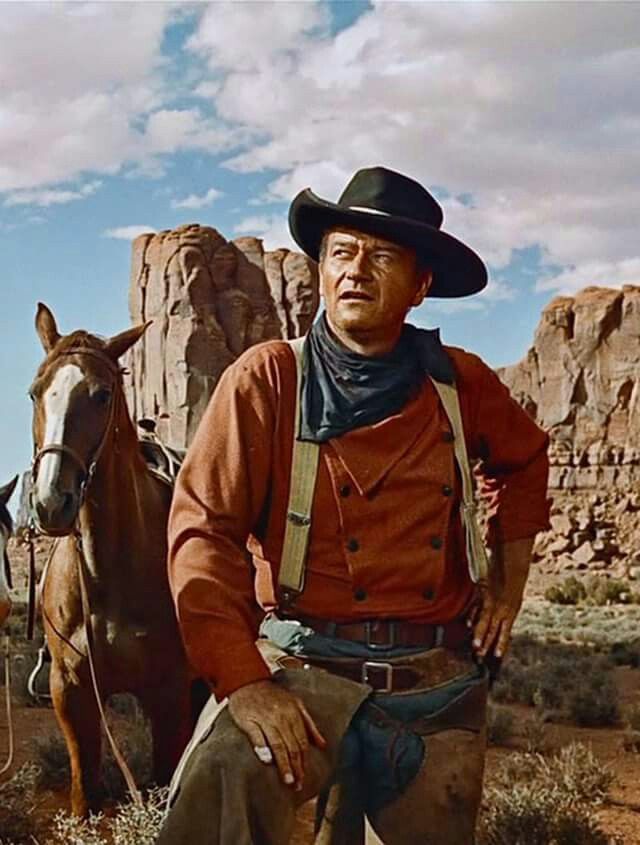
The Searchers (1956) 🏇 – John Wayne in a powerful tale of revenge and redemption directed by John Ford.

Django (1966) 🎵 – A brutal spaghetti western starring Franco Nero, which heavily influenced Quentin Tarantino.

Once Upon a Time in the West (1968) ⏳ – Sergio Leone at his best, with Henry Fonda playing an unforgettable villain.

Rio Bravo (1959) 🤠 – John Wayne and Dean Martin team up in this classic Western with action and humor.


True Grit (2010) 🔫 – The Coen Brothers reinvent this classic with Jeff Bridges as the relentless Rooster Cogburn.


The Assassination of Jesse James by the Coward Robert Ford (2007) 📖 – A poetic Western starring Brad Pitt and Casey Affleck.


Dances with Wolves (1990) 🐺 – Kevin Costner directs and stars in this epic Western about settlers and Native Americans.


The Magnificent Seven (1960) 🎯 – A Western remake of Seven Samurai, featuring Yul Brynner and Steve McQueen leading a band of gunslingers.

The Best Western Movies 🔥

 John Wayne helps Beulah Archuletta attend her son's wedding


The incident during filming.
During the filming of The Searchers, John Wayne discovered Beulah Archuletta crying between takes. When asked why, she explained that she would miss her son's wedding due to the production schedule. Wayne, known for his leadership and empathy on set, halted filming for two days and arranged for her to travel to California to attend the event.


Career: A supporting actress and extra in Westerns, she rose to prominence for her role in The Searchers and appeared in How the West Was Won (1962).


Personal Life: A member of the Gila River Indian community, she was married to Santiago Archuletta since 1934 and the mother of two children.

Legacy: Her brief but moving role in The Searchers is complemented by this humanitarian gesture from Wayne, which reflects the collaborative dynamic of the crew.

John Wayne helps Beulah Archuletta attend her son's wedding

 The Searchers: Complete Analysis of the Classic Western Legend


Analysis and Memories of "The Searchers" (1956): A John Ford Classic

Today we're going to delve into a must-see classic: "The Searchers" (1956), a cinematic gem directed by the legendary John Ford. This film, released in the same year as other greats like "Giant" and "The Man Who Knew Too Much," transports us to Monument Valley, a setting that Ford turned into a symbol of the American Western.
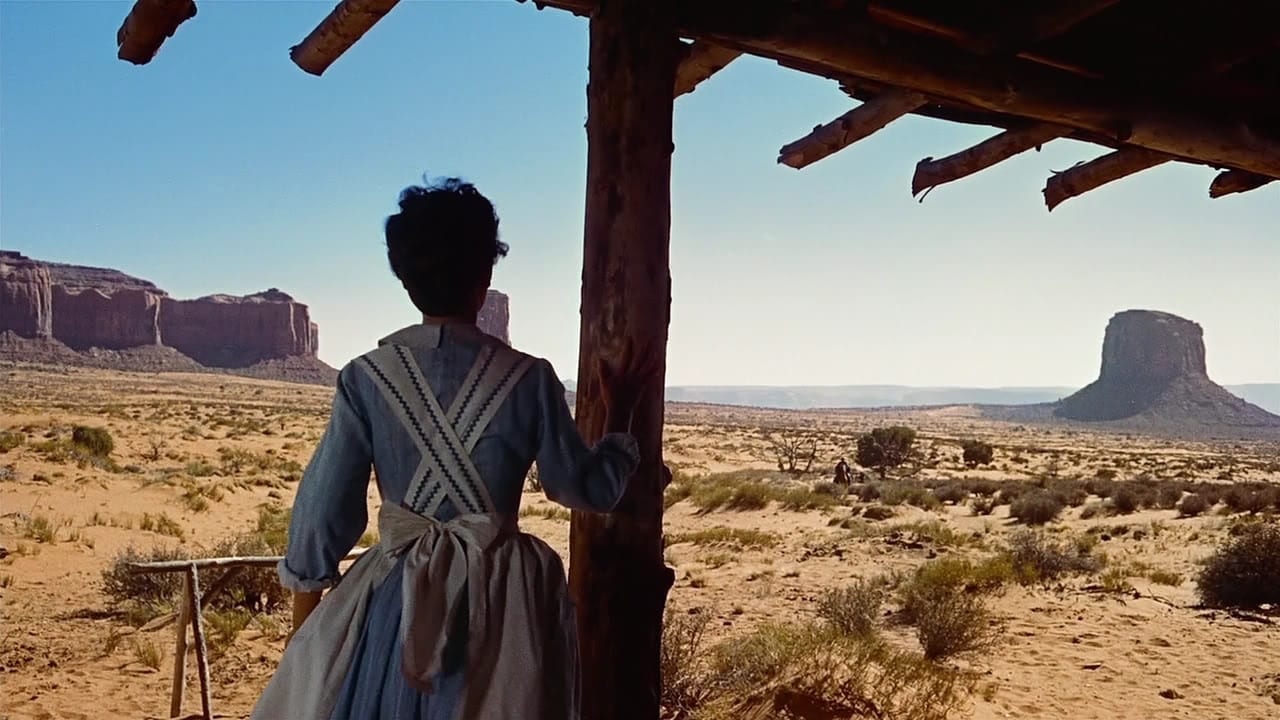


John Ford: A Pillar of American Cinema

We can't talk about "The Searchers" without mentioning John Ford. This director, often portrayed in black and white photos with his signature eye patch, is considered one of the founding fathers of American cinema, especially the Western genre. His genius lies in the fact that his films, even decades after their release, continue to resonate with audiences. Furthermore, Ford has been a key influence on filmmakers such as Orson Welles, Akira Kurosawa, and Martin Scorsese.


Interestingly, although Ford defi

ned himself as a Western director, his four Oscars were won for films in other genres such as "The Informer," "How Green Was My Valley," "The Grapes of Wrath," and "The Quiet Man." His western "Stagecoach" was nominated but did not win.


The Plot of "The Searchers"

By 1956, at the age of 62, Ford had already come a long way in cinema, beginning in the silent era of 1917. For "The Searchers," Ford adapted a novel by Alan Le May that addresses the theme of the kidnapping of white women by Native Americans during the expansion of settlers into North America.


The film opens with a seemingly tranquil scene, accompanied by the music of Max Steiner. We see Ethan Edwards (played by John Wayne, Ford's favorite actor) returning to his brother Aaron's farm after the American Civil War. Ethan is an enigmatic character, whose past is gradually revealed.


Fordian Characters and Key Moments

The film quickly introduces secondary characters typical of Ford, who bring touches of humor and nuance to the plot. One of them is the Reverend Captain Samuel Johnston Clayton (Ward Bond), who recruits men to pursue the Comanches.
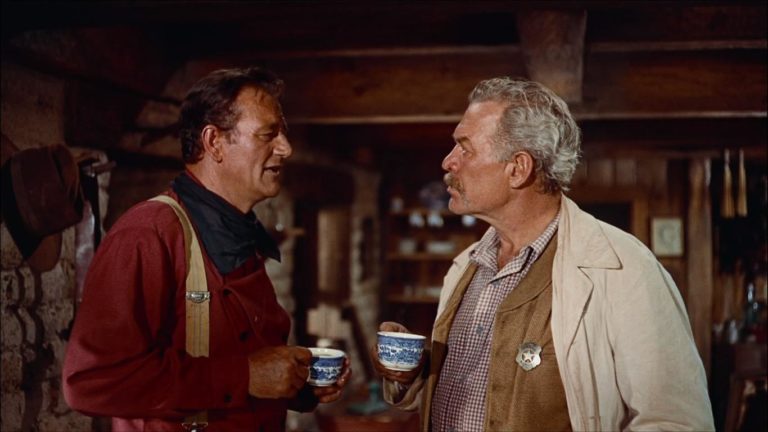


A key moment is when Ethan joins the Indian hunting party. Here, Ford shows us an untold love story between Ethan and Martha, his sister-in-law, through subtle glances and gestures. The reverend's presence adds an additional layer to this scene, suggesting that this feeling is known to others.
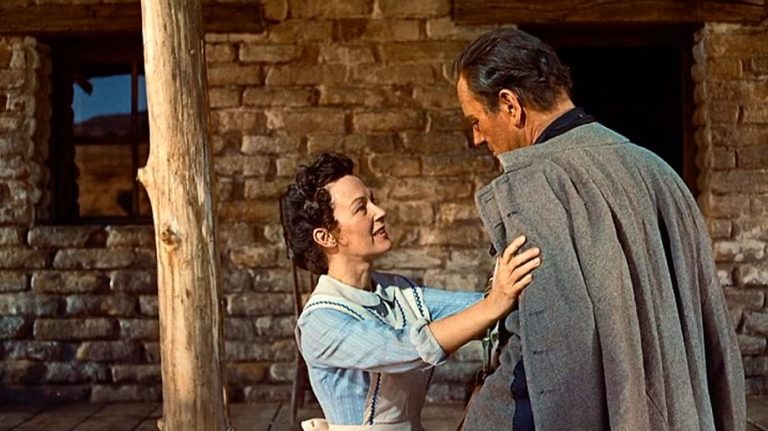


Tragedy strikes when the farm is attacked by Comanches, who kill the family and kidnap the two girls, Lucy and Debbie. The main plot focuses on the tireless search for Debbie by Ethan and Martin, a young mixed-race man adopted by his brother. As the search progresses, Ethan becomes more depressed and fears that Debbie has become an Indian.


An Uncertain Ending

The film's ending is ambiguous, leaving the viewer wondering whether it's a happy ending or not. I invite you to watch it and draw your own conclusions.


Movie Trivia
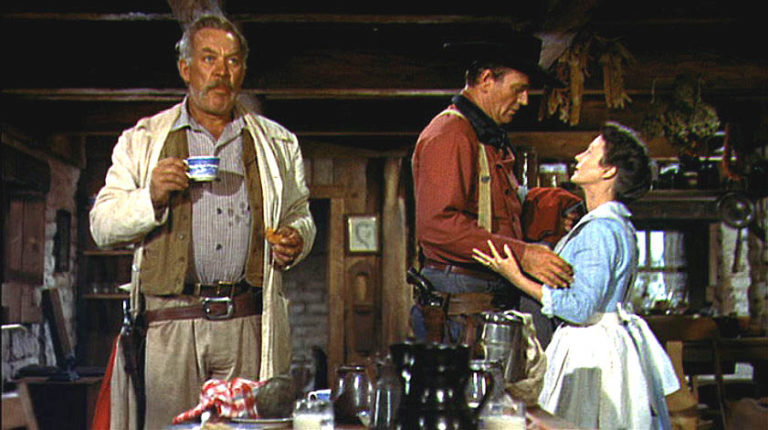

Chief Scar: Played by Henry Brandon, the only non-Indian actor in the Comanche group. Brandon was of German descent, while the rest of the Comanches were Navajo Indians hired by Ford.


John Wayne and Ethan Edwards: Wayne had a great fondness for the role of Ethan Edwards, so much so that he named one of his sons after him.
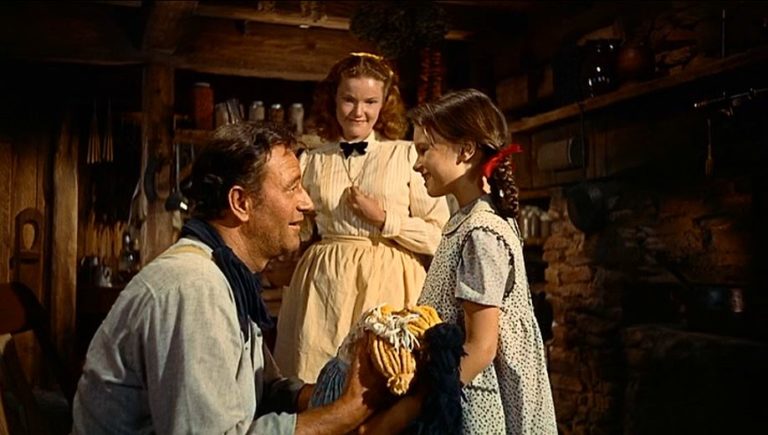


John Wayne's Oscar: Interestingly, John Wayne did not win any Oscars for his performances in John Ford's films. His only statuette was for his role in "True Grit" (1969), directed by Henry Hathaway.


The Portrayal of Native Americans: At the time "The Searchers" was filmed, the portrayal of Native Americans in American cinema was negative. Ford later attempted to compensate for this with "The Big Fight" (1964), which offered a more dignified and realistic portrayal of Native Americans.


Final Thoughts

"The Searchers" is a classic that deserves to be revisited and appreciated for its complexity, memorable characters, and impact on film history. I invite you to immerse yourself in this John Ford masterpiece and discover why it remains relevant today.

Visit My Channel: https://www.youtube.com/@TheDukeChronicles

The Searchers: Complete Analysis of the Classic Western Legend

 John Ford, the temperamental


August 31, 2023, marks the 50th anniversary of the death of John Ford, an immense, complex, and enigmatic figure. A name etched in the history of cinema, not only for having defined the Western, but for his overall impact on the industry. An obligatory reference for directors like Steven Spielberg, who has acknowledged his influence on numerous occasions, Ford was a director full of contradictions: sensitive beneath a rude exterior, generous and tyrannical in equal measure, a fervent defender of family values, yet careless in his own personal life. An artist whose passion magnified the art to which he dedicated himself.

Ford found happiness in filmmaking, distancing himself from his usual self-destructive spiral and his stormy relationship with alcohol. His films were a reflection of his complex personality, with a fine line between admiration and abuse of those around him. His masterpieces include "Stagecoach" (1939), "The Grapes of Wrath" (1940), "The Quiet Man" (1952), "The Searchers" (1956), and "The Man Who Shot Liberty Valance" (1962). Ford was a filmmaker who imposed his will on producers, who rarely interfered with his filming. His personal stamp remained unwavering, combining a deep respect for the industry with an innate rebelliousness.

He was always a director of his own accord, famous for cutting scenes immediately to prevent the editor from dragging them out. In his personal life, his trademark eyepatch was not only a hallmark of his image, but a consequence of his impatience: he lost the vision in one eye after removing the bandage too soon following cataract surgery. Over time, he also feigned deafness, which he used to isolate himself from the world when he deemed it necessary.


Known in his youth as "Bull" Feeney for his robust build, John Martin Aloysius Feeney stood 6 feet 11 inches tall and weighed 175 pounds. His squint gave him a vulnerable air, contrasting with his tough image. Fascinated by American history, he found refuge there from the ethnic tensions he experienced as the son of first-generation Irish immigrants. His work was marked by family, tradition, and the sincere expression of emotion—concerns considered "feminine" in his time, but deeply rooted in his Irish heritage.

His films reflected this duality: cowboys hardened by life, yet unable to hide their humanity. Actors such as John Wayne, James Stewart, and Henry Fonda brought to life characters who embodied the struggle between toughness and sensitivity. Within his team, Ford created a true cinematic family, a loyal group with whom he worked frequently.

Beneath his rugged appearance and his fondness for alcohol and cigars, lay a poetic sensibility inherited from his ancestors. His films exalted the land, friendship, resilience, and solidarity. Although he masterfully shot grand landscapes, his true talent emerged in intimate scenes charged with genuine emotion. For him, repeating a scene to the point of losing its spontaneity was a failure.

Politically, Ford was an unclassifiable figure. Although he produced propaganda for the US government during World War II, he also denounced the precariousness of the working class in "The Grapes of Wrath" and supported advances in civil rights under Kennedy. As for his alleged misogyny, his films feature strong and determined women, far removed from the conservative archetype.

Ford defied labels and conventions, capturing the essence of the human condition in all its complexity. He had a deep empathy for ordinary people, those who face adversity with dignity. For him, cinema was not just a matter of technique, but of character and emotion.

His great skill was to master the sentimental without falling into the mawkish, thanks to his honesty and truth. With songs, dances, fights, and unforgettable characters, he captivated audiences without abandoning the action, but always with the goal of leaving a lesson. Even his most obscure film has a purpose and a lasting impact.

John Ford is the essence of classic American cinema, a poet of the image whose filmography continues to define cinema as an art and vehicle for emotion. His legacy is unique, as he is the only director to win four Oscars: "The Informer" (1936), "The Grapes of Wrath" (1941), "How Green Was My Valley" (1942), and "The Quiet Man" (1953).

We will never know who John Ford really was, but perhaps it isn't necessary. As he himself would say: "If facts become legend, print the legend."


John Ford, the temperamental

 Why John Wayne Never Went to War – The Untold Truth


Why didn’t John Wayne serve in World War II? While many Hollywood stars joined the military, the Duke stayed behind. Was it patriotism, politics, or something else? In this video, we uncover the real reason why John Wayne never went to war and how it shaped his career and legacy. Don’t miss this deep dive into one of Hollywood’s biggest war controversies!


Why John Wayne Never Went to War – The Untold Truth

John Wayne's Secret Love Life Revealed in Rare Interview


"Step into the world of John Wayne and his most trusted companions—the magnificent horses that galloped alongside him through iconic Westerns! Discover fascinating stories about Dollor, the horse he held dearest, and other equine partners who helped bring the Wild West to life on screen. Learn how these horses became symbols of loyalty, strength, and adventure in 'The Duke’s' legendary career. Saddle up for a nostalgic journey through the Western frontier and uncover why these majestic animals were more than just props—they were part of Wayne’s enduring legacy!"


"The Favorite Horses of John Wayne: The Duke’s Trusted Companions"

  The Star Packer ThThe Star Packe

 The Star Packer


r

The Star Packer is a 1934 American western film starring John Wayne. The film was directed by Robert N. Bradbury and produced by Paul Malvern. It is one of multiple westerns in which Wayne participated during the early years of his career, before he became a major Hollywood star.

Synopsis:
Sheriff John Travers (John Wayne) arrives in a small town to investigate a series of murders committed by a gang of outlaws led by a mysterious villain known as “The Shadow.” Travers, along with his faithful friend Yak (played by Yakima Canutt), confronts the bandits while seeking justice for the town's residents. As the story progresses, Travers not only dismantles the gang, but also unveils the true identity of “The Shadow.”

Highlights:
Running time: Approximately 53 minutes, making it a short and concise western.
Style: Classic western action, with gunfights, horseback riding and a narrative centered on the struggle of good versus evil.
Additional cast: Yakima Canutt, George 'Gabby' Hayes and Verna Hillie, among others.
Curiosities:
The film is an example of the type of low-budget westerns that were popular during the 1930s.
John Wayne had not yet achieved the iconic status he would later attain with films such as Stagecoach (1939).
The title, “The Star Packer,” refers to Travers, who represents the law in a land full of chaos.
If you're a fan of the classic western, The Star Packer offers a look at John Wayne's early career and stories of justice on the American frontier.

Translated with DeepL.com (free version)
e S The Star Packertar PackerThe Star PackerThe Star Packerl

The Star Packer

- Copyright © the john wayne chronicles - Blogger Templates - Powered by Blogger - Designed by Johanes Djogan -