The Best Western Movies 


The Good, the Bad and the Ugly
The Good, the Bad and the Ugly (1966) 🎭 – Directed by Sergio Leone. An epic spaghetti western starring Clint Eastwood with a legendary Ennio Morricone soundtrack.

Unforgiven (1992) 🔥 – Clint Eastwood directs and stars in this revisionist western that redefined the genre.

The Searchers (1956) 🏇 – John Wayne in a powerful tale of revenge and redemption directed by John Ford.

Django (1966) 🎵 – A brutal spaghetti western starring Franco Nero, which heavily influenced Quentin Tarantino.

Once Upon a Time in the West (1968) ⏳ – Sergio Leone at his best, with Henry Fonda playing an unforgettable villain.

Rio Bravo (1959) 🤠 – John Wayne and Dean Martin team up in this classic Western with action and humor.


True Grit (2010) 🔫 – The Coen Brothers reinvent this classic with Jeff Bridges as the relentless Rooster Cogburn.


The Assassination of Jesse James by the Coward Robert Ford (2007) 📖 – A poetic Western starring Brad Pitt and Casey Affleck.


Dances with Wolves (1990) 🐺 – Kevin Costner directs and stars in this epic Western about settlers and Native Americans.


The Magnificent Seven (1960) 🎯 – A Western remake of Seven Samurai, featuring Yul Brynner and Steve McQueen leading a band of gunslingers.

The Best Western Movies 🔥

 "The Incredible Moment: James Caan Arriving on the Set of 'El Dorado' – A Western Legend"


"Step back in time to witness James Caan's unforgettable arrival on the set of the classic western 'El Dorado.' Discover behind-the-scenes stories and iconic moments that shaped one of the greatest films in cinema history. Dive into the legend of James Caan and the magic of western filmmaking!"


"The Incredible Moment: James Caan Arriving on the Set of 'El Dorado' – A Western Legend"

 The ghost ship that continued to sail unmanned for years


The ghost ship that continued to sail unmanned for years
One of the strangest cases of World War II was that of the SS Baychimo, a ship that became a true “ghost ship” and wandered the ocean without a crew for decades.

The beginning of the mystery
The SS Baychimo was a merchant ship built in 1914 for the Hudson's Bay Company and was used to transport furs and supplies across the Arctic. In 1931, it became trapped in the ice off the coast of Alaska. The crew attempted to free it, but extreme temperatures made this impossible.

Faced with the possibility of being trapped and freezing to death, the crew was rescued by an airplane and left the ship abandoned, believing it would soon sink.

The ship that refused to die
Incredibly, the Baychimo did not sink. On the contrary, over time, it managed to free itself from the ice and began drifting around the Arctic.


In the following years, multiple sightings were reported:

In 1932, it was found floating 300 miles from where it had been trapped.

In 1935, a group of explorers attempted to board it, but a storm forced them to abandon it.

During the 1940s and 1950s, fishermen, travelers and merchant ships reported sightings in different parts of the Arctic.

In 1969, the last confirmed sighting placed it trapped in the ice again near Alaska.

Where is the Baychimo today?

After 1969, the ship disappeared completely. It is unknown if it finally sank or if it is still drifting in some corner of the ocean. To this day, it remains an unsolved mystery and one of the most famous ghost ships in history.

It is impressive how a simple merchant ship survived decades without a crew, becoming a legend of World War II.

The ghost ship that continued to sail unmanned for years

 The Japanese soldier who resisted for 30 years without knowing that World War II had ended


Hiroo Onoda was born in 1922 in Wakayama Prefecture, Japan. In 1944, he was sent to Lubang Island (Philippines) as part of a group of Japanese soldiers with the mission of sabotaging Allied operations and preventing the island from falling into enemy hands. Before Japan's withdrawal, his superiors gave him strict orders: "Do not surrender under any circumstances" and "Survive until we return."

The End of the War and Isolation
When Japan surrendered in August 1945, Onoda and three other soldiers on Lubang refused to believe it. Despite leaflets dropped by Allied planes and messages broadcast by megaphone, they suspected it was an enemy ploy to lure them out. The soldiers retreated into the jungle, living in caves and surviving on food they hunted or stole from local farmers.

Eventually, two of their comrades died in fighting or from disease, and the third, Yuichi Akatsu, surrendered in 1950 after abandoning the group. Onoda was left alone, but he remained firmly convinced that the war continued.


Years of Resistance
For decades, Onoda carried out guerrilla operations: burning crops, cutting telephone cables, and spying on the island's inhabitants, whom he considered "enemy collaborators." Attempts by the Philippine and Japanese governments to locate him failed, even after his family and former comrades traveled to Lubang to persuade him. In 1959, Japan declared him legally dead.

The End of the Personal Conflict
In 1974, a Japanese adventurer, Norio Suzuki, managed to find him in the jungle. Onoda, however, refused to surrender without a direct order from his superior. Suzuki traveled to Japan and located Onoda's former commander, Yoshimi Taniguchi, who had been promoted to major. Taniguchi traveled to the Philippines and, in March 1974, formally ordered him to lay down his arms.

Onoda surrendered his samurai sword and rifle (which still had bullets), ending his "personal war." He was 52 years old.

Return to Japan and Legacy
Upon returning to Japan in 1975, Onoda found a modernized society he barely recognized. He was hailed as a hero, but also criticized for his role in attacks on Filipino civilians (which he justified as acts of war). He later moved to Brazil to raise cattle, though he returned to Japan in 1984. He published a book about his experiences (No Surrender: My Thirty-Year War) and founded an educational camp for youth. He died in 2014 at the age of 91.

The Japanese soldier who resisted for 30 years without knowing that World War II had ended

 John Wayne helps Beulah Archuletta attend her son's wedding


The incident during filming.
During the filming of The Searchers, John Wayne discovered Beulah Archuletta crying between takes. When asked why, she explained that she would miss her son's wedding due to the production schedule. Wayne, known for his leadership and empathy on set, halted filming for two days and arranged for her to travel to California to attend the event.


Career: A supporting actress and extra in Westerns, she rose to prominence for her role in The Searchers and appeared in How the West Was Won (1962).


Personal Life: A member of the Gila River Indian community, she was married to Santiago Archuletta since 1934 and the mother of two children.

Legacy: Her brief but moving role in The Searchers is complemented by this humanitarian gesture from Wayne, which reflects the collaborative dynamic of the crew.

John Wayne helps Beulah Archuletta attend her son's wedding

 The Searchers: Complete Analysis of the Classic Western Legend


Analysis and Memories of "The Searchers" (1956): A John Ford Classic

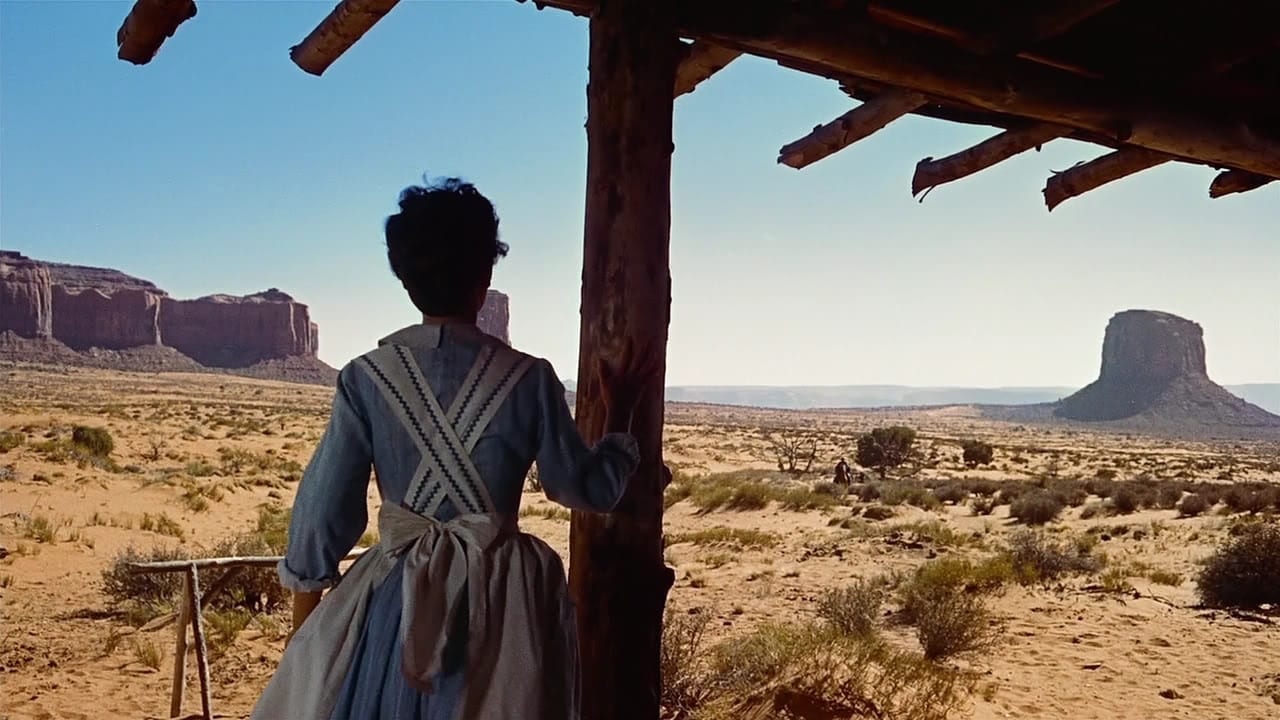
Today we're going to delve into a must-see classic: "The Searchers" (1956), a cinematic gem directed by the legendary John Ford. This film, released in the same year as other greats like "Giant" and "The Man Who Knew Too Much," transports us to Monument Valley, a setting that Ford turned into a symbol of the American Western.


John Ford: A Pillar of American Cinema

We can't talk about "The Searchers" without mentioning John Ford. This director, often portrayed in black and white photos with his signature eye patch, is considered one of the founding fathers of American cinema, especially the Western genre. His genius lies in the fact that his films, even decades after their release, continue to resonate with audiences. Furthermore, Ford has been a key influence on filmmakers such as Orson Welles, Akira Kurosawa, and Martin Scorsese.


Interestingly, although Ford defi

ned himself as a Western director, his four Oscars were won for films in other genres such as "The Informer," "How Green Was My Valley," "The Grapes of Wrath," and "The Quiet Man." His western "Stagecoach" was nominated but did not win.


The Plot of "The Searchers"

By 1956, at the age of 62, Ford had already come a long way in cinema, beginning in the silent era of 1917. For "The Searchers," Ford adapted a novel by Alan Le May that addresses the theme of the kidnapping of white women by Native Americans during the expansion of settlers into North America.


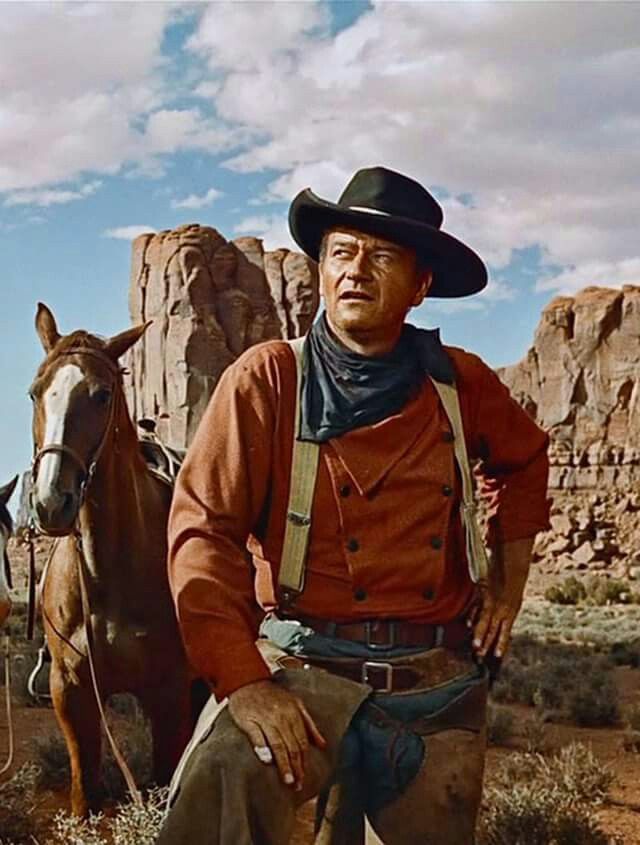
The film opens with a seemingly tranquil scene, accompanied by the music of Max Steiner. We see Ethan Edwards (played by John Wayne, Ford's favorite actor) returning to his brother Aaron's farm after the American Civil War. Ethan is an enigmatic character, whose past is gradually revealed.


Fordian Characters and Key Moments

The film quickly introduces secondary characters typical of Ford, who bring touches of humor and nuance to the plot. One of them is the Reverend Captain Samuel Johnston Clayton (Ward Bond), who recruits men to pursue the Comanches.
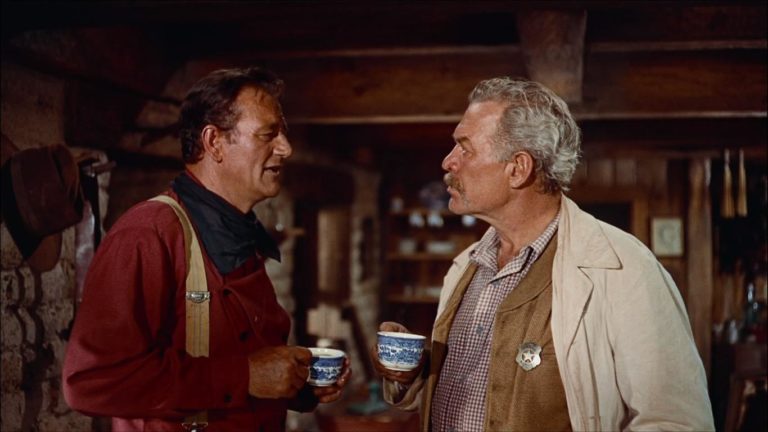


A key moment is when Ethan joins the Indian hunting party. Here, Ford shows us an untold love story between Ethan and Martha, his sister-in-law, through subtle glances and gestures. The reverend's presence adds an additional layer to this scene, suggesting that this feeling is known to others.
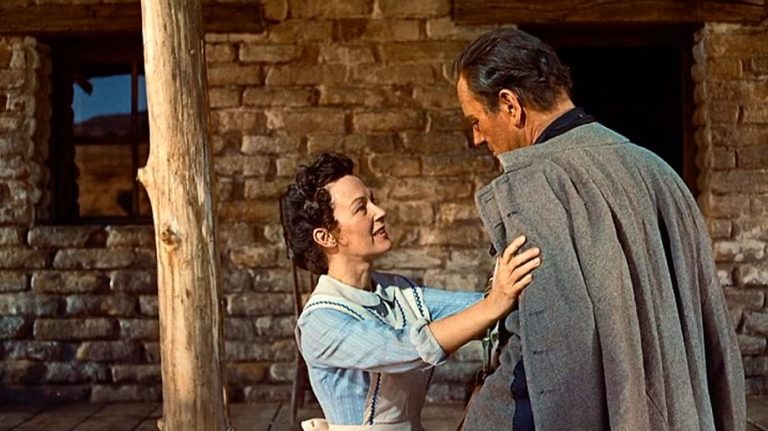


Tragedy strikes when the farm is attacked by Comanches, who kill the family and kidnap the two girls, Lucy and Debbie. The main plot focuses on the tireless search for Debbie by Ethan and Martin, a young mixed-race man adopted by his brother. As the search progresses, Ethan becomes more depressed and fears that Debbie has become an Indian.


An Uncertain Ending

The film's ending is ambiguous, leaving the viewer wondering whether it's a happy ending or not. I invite you to watch it and draw your own conclusions.


Movie Trivia
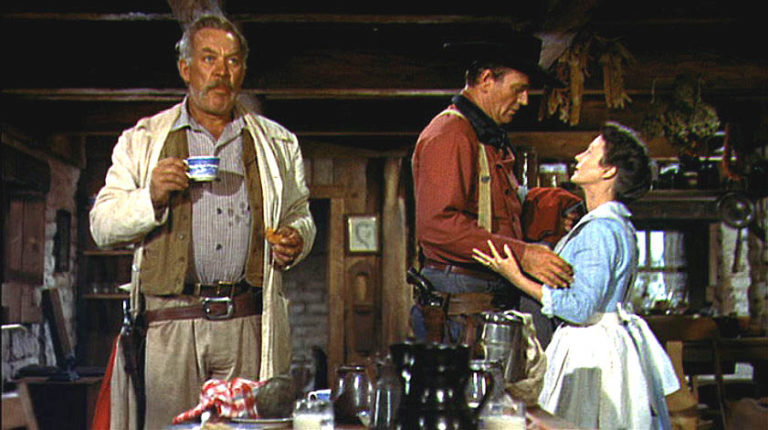

Chief Scar: Played by Henry Brandon, the only non-Indian actor in the Comanche group. Brandon was of German descent, while the rest of the Comanches were Navajo Indians hired by Ford.


John Wayne and Ethan Edwards: Wayne had a great fondness for the role of Ethan Edwards, so much so that he named one of his sons after him.
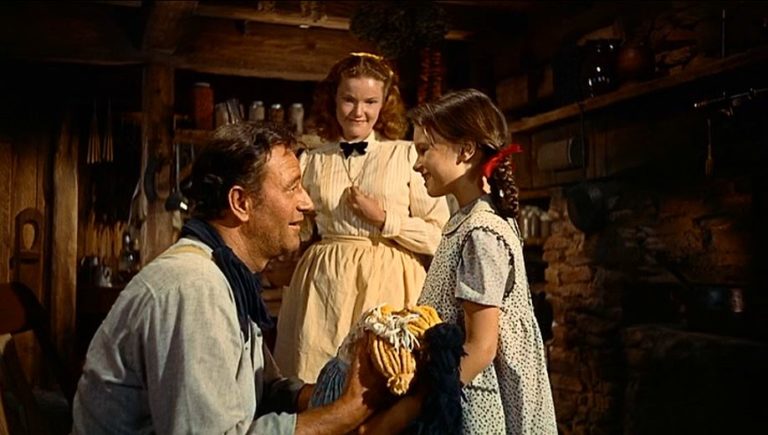


John Wayne's Oscar: Interestingly, John Wayne did not win any Oscars for his performances in John Ford's films. His only statuette was for his role in "True Grit" (1969), directed by Henry Hathaway.


The Portrayal of Native Americans: At the time "The Searchers" was filmed, the portrayal of Native Americans in American cinema was negative. Ford later attempted to compensate for this with "The Big Fight" (1964), which offered a more dignified and realistic portrayal of Native Americans.


Final Thoughts

"The Searchers" is a classic that deserves to be revisited and appreciated for its complexity, memorable characters, and impact on film history. I invite you to immerse yourself in this John Ford masterpiece and discover why it remains relevant today.

Visit My Channel: https://www.youtube.com/@TheDukeChronicles

The Searchers: Complete Analysis of the Classic Western Legend

- Copyright © the john wayne chronicles - Blogger Templates - Powered by Blogger - Designed by Johanes Djogan -